Puppies explore with their noses, paws, and mouths before they understand household rules. Puppy proofing at home gives that curiosity a safer place to land. It is not about removing every interesting object or turning rooms into sterile spaces. It is about identifying the items and patterns most likely to create trouble. Cords, shoes, plants, trash, dropped food, and small objects can become tempting in seconds. A useful setup also gives puppies appropriate alternatives before boredom turns into mischief. The first review should happen before arrival, but it should not end there. Puppies change quickly as they grow taller, bolder, and more coordinated. Regular checks keep the home aligned with their new abilities. Good safety habits make supervision more effective and daily life less stressful.
Puppy Proofing at Home Starts at Floor Level
Get down low and look at each room from your puppy’s perspective. Notice hanging cords, accessible shelves, loose items, plant leaves, open bins, and objects that roll beneath furniture. Anything within reach may become a target during a curious moment. Move hazards before you assume you will have time to intervene. A room-by-room safety plan can help you work through the house without relying on memory. Start with the areas your puppy will use most often. Keep a basket near each active zone for items that need quick storage. Block access to high-risk corners while you build habits. Small environmental changes can prevent many unnecessary corrections. Floor-level awareness is the foundation of practical puppy safety.
Why Puppy Proofing at Home Is a Daily Practice
A safe room can change within one busy hour. Someone may leave a bag open, drop a medication, carry in groceries, or set a drink on a low table. These details become more important when a puppy is exploring freely. Build short safety checks into natural transitions such as arriving home, starting dinner, or preparing for bed. Scan the floor, close bins, collect laundry, and clear any tempting items. Keep emergency contacts and veterinary information easy to access. Treat these actions like locking a door, not like an exhausting project. Repetition makes them faster and more automatic. Daily reviews also help everyone in the household share responsibility. Consistent prevention is easier than reacting after the fact.
Puppy Proofing at Home Needs Better Alternatives
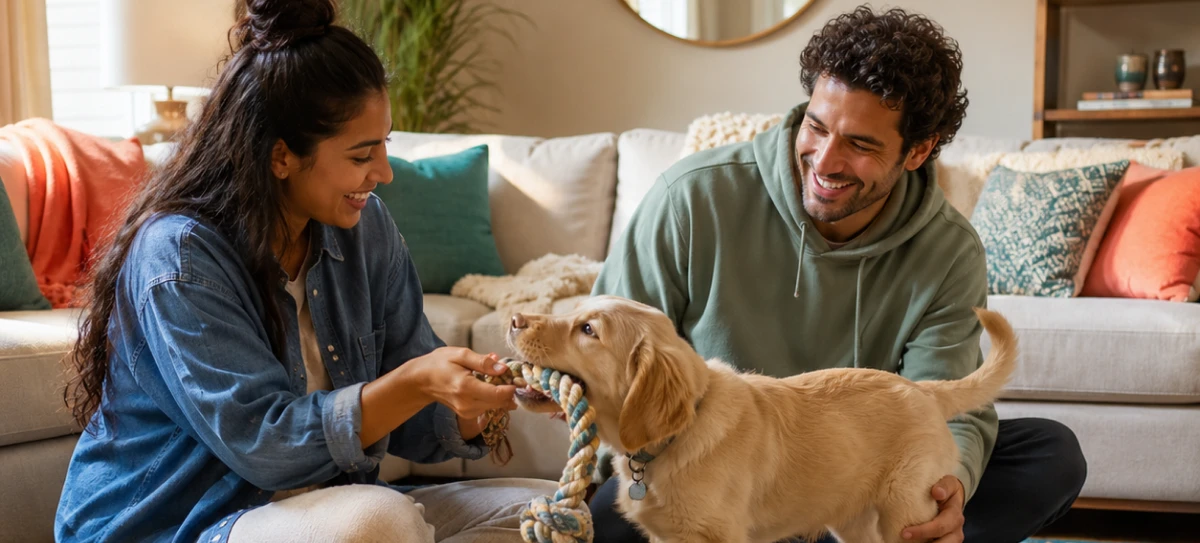
Puppies need to chew, investigate, and engage with their environment. Removing hazards without offering suitable choices can leave them frustrated and bored. Keep a small rotation of safe chew options where your puppy spends time. Offer them before a predictable busy moment, such as a call, meal preparation, or visitor arrival. A chew-safe home setup helps you match alternatives to the places where temptation appears. Store shoes, remotes, and children’s toys out of reach rather than expecting a puppy to ignore them immediately. Reward your puppy for choosing the right item. Replace worn or unsuitable options promptly. The home becomes easier to navigate when good choices are always available. Prevention and redirection work best as a team.
Use Puppy Proofing at Home to Create Calmer Boundaries
Gates, doors, pens, and closed rooms are not punishments when they are used thoughtfully. They let you control access while your puppy is still learning what belongs to them. Decide which spaces need full supervision and which can be introduced gradually. Keep boundaries consistent so your puppy does not have to guess each day. Use a gate before the situation becomes difficult, not after frustration has already started. Make the protected area comfortable with a safe activity and a place to rest. Introduce new rooms in short, positive sessions. Watch what draws your puppy’s attention and adjust the environment accordingly. Calm boundaries create more opportunities for successful learning. They also give people a chance to relax without constant monitoring.
Rooms Change, So Reviews Matter
Your puppy will reach higher shelves, fit through smaller gaps, and discover new textures as weeks pass. The home that felt secure in the first days may need another look soon after. Revisit areas where your puppy has shown repeated interest. Check under furniture, behind doors, near bins, and around children’s belongings. Update your approach after guests, seasonal decorations, or changes in work routines. Keep an eye on plants and household products whenever rooms are rearranged. A quick review after a growth spurt can prevent surprises. This is not about expecting disaster. It is about respecting how quickly puppies learn to explore. Ongoing awareness keeps safety practical instead of overwhelming.
Safety Is a Routine, Not a One-Time Task
The goal is not a home with no possibilities for puppy behavior. The goal is a home where the safest choice is also the easiest one. A puppy safety reminders system keeps important details visible until they become habits. Use it to support the people who share your space, including visitors and pet sitters. Review what is working after the first few days. Adjust storage, boundaries, and chew options before problems repeat. Your puppy will still test limits, because that is part of learning. A prepared environment gives you more chances to respond calmly. With repeatable habits in place, home can feel welcoming, secure, and ready for puppy life. The result is more freedom with fewer surprises.